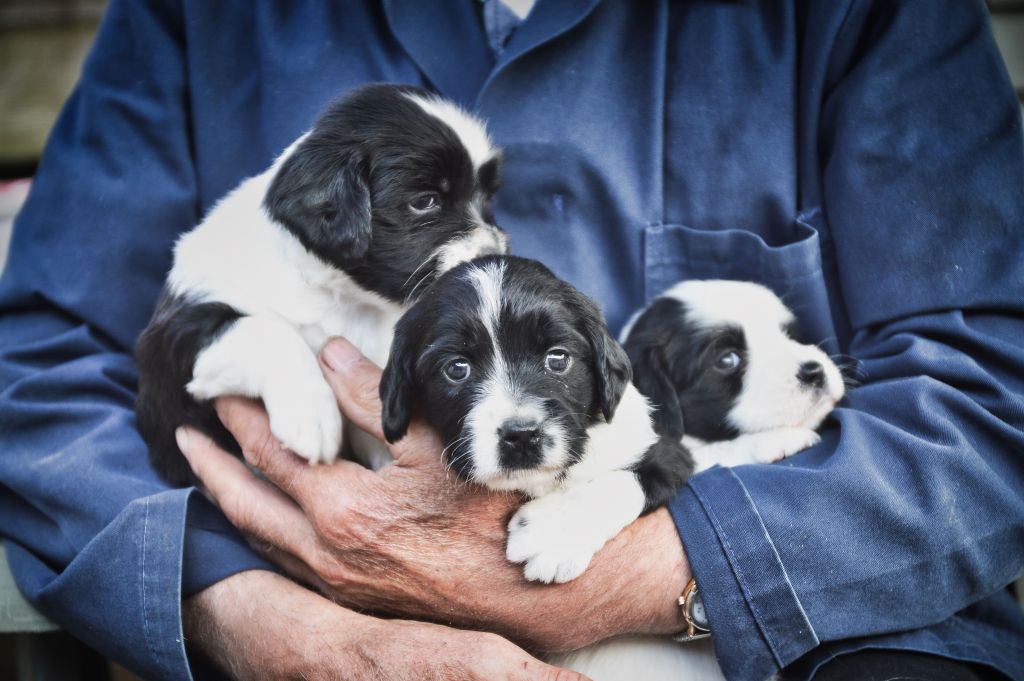
Puppy Development
The First 8 Weeks
Explore By Weeks
The Neonatal Period
Birth to 2 Weeks
During the first two weeks of life, puppies are completely dependent on their mother for warmth, nutrition and care. Born with their eyes and ear canals closed, they experience their early world primarily through touch, scent and warmth, spending most of their time nursing and sleeping while important physical and neurological development takes place.
During this stage, puppies generally:
Spend most of their time sleeping and nursing
Have closed eyes and ear canals
Rely heavily on touch and scent
Depend on their mother for warmth, nutrition and care
What matters most?
Warmth. Nutrition. Maternal care. Appropriate gentle handling. Careful observation.
The Transitional Period
Around 2 – 3 Weeks
The transitional period brings some of the most noticeable changes in early puppy development. A puppy that previously relied largely on touch, scent and warmth begins gaining access to much more information about the world around them. Their eyes begin to open, although vision is initially immature, while their ear canals also open and they gradually begin responding to sounds. At the same time, their movement improves as they learn to stand and take their first unsteady steps. Interaction between littermates also begins to change as puppies become increasingly aware of one another and start engaging with their surroundings in new ways.
Puppies may begin:
Opening their eyes and developing hearing
Start to stand and taking first steps
Interacting more deliberately with littermates
Their World Is Getting Bigger
For the first time, puppies are beginning to experience their environment through an expanding combination of sight, sound, scent, touch and movement.
There is no need to rush this process.
Their sensory systems are still developing, so experiences should remain gentle and appropriate to their capabilities.
Discovering the World
Around 3 – 4 WEEKS
As mobility and coordination improve, puppies become increasingly interested in the world beyond their sleeping area. Their walking becomes steadier, interactions with littermates increase, and they begin actively investigating the objects, surfaces and spaces around them. This growing curiosity creates opportunities to gradually introduce simple and appropriate environmental experiences. Puppies may begin encountering gentle everyday household sounds, different surfaces and safe objects they can investigate at their own pace, allowing their environment to expand naturally as their physical abilities and awareness develop.
At this stage you may notice:
Increased social play and awareness of people
More exploration and interest in objects
Early development of toileting habits
Changes associated with the beginning of weaning
The objective isn’t to challenge puppies constantly.
Instead, the environment can gradually become more interesting as their ability to explore it develops
For the first time, puppies are beginning to experience their environment through an expanding combination of sight, sound, scent, touch and movement.
There is no need to rush this process.
Their sensory systems are still developing, so experiences should remain gentle and appropriate to their capabilities.
Curiosity, Play & Learning
Around 4 – 5 WEEKS
By four to five weeks, puppies are typically becoming much more interactive with the world around them. Individual personalities may become more noticeable, play becomes increasingly complex, and puppies spend more time actively investigating their surroundings. Play is more than entertainment; through interactions with their littermates, mother, people and environment, puppies have opportunities to practise movement, communication and developing social behaviours. As their confidence, coordination and curiosity grow, appropriate enrichment can also become more varied, introducing new textures, surfaces, objects, sounds and simple experiences in a gradual and carefully managed way.
Depending on the individual puppy, experiences might include:
Short experiences in different safe environments
Gentle household noises and safe objects
Simple problem-solving opportunities
Low, stable platforms and different surfaces
More isn’t always betterTheir World Is Getting Bigger
Young puppies need a balance between enrichment and rest. More stimulation does not necessarily create a better-prepared puppy, and constant novelty can become overwhelming. A good environment provides opportunities to explore and learn while allowing plenty of time to withdraw, rest and sleep.
Quality matters more than quantity.
Building Confidence & Independence
Around 5 – 6 WEEKS
As puppies grow, they become increasingly independent, coordinated and engaged with their surroundings. Social play becomes more sophisticated and individual personalities may become more noticeable. This period also provides opportunities for short, positive introductions to experiences they may encounter later in life.
These might include:
Exploring a crate with the door open
Gentle body handling, feet, ears and mouth
Very simple training games
Short individual interactions with people
The emphasis should remain on short, positive and age-appropriate experiences.
Preparing for Life Beyond the Litter
Around 6 – 7 WEEKS
As puppies approach the age of leaving for their new homes, their experiences can gradually begin reflecting everyday life. Depending on vaccination status, disease risk, veterinary advice and the individual puppy, breeders may introduce a wider variety of safe and appropriate experiences.
These may include:
Car travel – short, positive journeys
Age-appropriate toys and enrichment
Brief, appropriate periods away from littermates
Interactions with a variety of people, including different ages, genders, appearances
Care should always be taken when exposing incompletely vaccinated puppies to environments or unfamiliar dogs because infectious-disease risk must be considered alongside behavioural development.
Always seek veterinary advice regarding appropriate and safe exposure for puppies based on their vaccination status and local disease risks.
One Litter. Different Puppies
One of the most important things to remember during this period is that puppies within the same litter are individuals. One puppy may investigate something immediately, while another may prefer to stop and observe, and another may need more time or distance before approaching. The goal is not to force every puppy through the same checklist of experiences, but to observe how each puppy responds and adapt experiences to suit the individual.
Good developmental experiences should build on the individual puppy rather than overwhelm them.
Getting Ready for Their Next Chapter
Around 7 – 8 WEEKS
By seven to eight weeks, puppies are remarkably different from the tiny newborns they were only weeks earlier. They are mobile, playful, curious and increasingly capable of learning through interactions with people, littermates and their environment. For many breeders, this stage also begins the important process of preparing puppies for the transition into their future homes.
Depending on local requirements and veterinary recommendations, preparations may include:
Veterinary health checks are completed. Including vaccinations, microchipping and parasite management
Continued positive handling and grooming experiences
Eating and drinking independently, with established foundations for toileting in designated areas.
Comfortable with short car journeys and spending time calmly in a crate.
preparing the new owner is just as important
New puppy owners should leave their breeder with clear information about their puppy’s diet, routine, sleep, veterinary care, grooming, training, socialisation, exercise and ongoing development. Sharing details of the experiences the puppy has already encountered can also help owners understand their puppy’s foundations and continue building on them appropriately in their new home.
Every Puppy Develops Differently
Development can vary between individual puppies, breeds, litter sizes and circumstances. The ages in this guide are general ranges, not strict milestones.
Good puppy development isn’t about ticking boxes. It’s about observing the in front of you and providing experiences appropriate for that individual.
Eight Weeks Is Just The Beginning
Explore what happens as puppies settle into their new homes and continue developing physically, socially and behaviourally.
New Here?
Start with our essential guides to early puppy development and enrichment.
What About Early Neurological Stimulation?
Some breeders choose to introduce a structured program known as Early Neurological Stimulation (ENS) during part of this early developmental period. ENS involves a short series of specific handling and positioning exercises.
The First 8 Weeks At A Glance
BIRTH
Dependent on Mum
Warmth, nursing, sleep and maternal care.
AROUND 2 WEEKS
The Senses Begin Changing
Eyes and ear canals begin opening and awareness increases.
AROUND 3 WEEKS
Movement & Exploration
Walking improves and puppies begin investigating their environment.
AROUND 4 WEEKS
Play & Interaction
Social play, environmental exploration and learning opportunities increase.
AROUND 5 WEEKS
Curiosity & Learning
Puppies become increasingly interested in people, objects and experiences.
AROUND 6 WEEKS
Growing Independence
Individual personalities and responses become increasingly apparent.
AROUND 7 WEEKS
Preparing for Change
Everyday experiences can gradually help prepare puppies for future life.
AROUND 8 WEEKS
The Next Chapter Begins
For many puppies, the transition from breeder to their new family approaches.
Educational Information
The information provided by Canine Performance Co. is for general educational purposes only. Development varies between individual puppies and breeds, and this information should not be used as a substitute for veterinary or other appropriately qualified professional advice.
Always consult your veterinarian regarding the health, vaccination, nutrition and individual developmental needs of puppies in your care.

Purpose-driven products, premium brands and practical education for every stage of your dog’s life
CONTACT US
© 2026 Canine Performance Co. All rights reserved